Date: 08.10.2025 11:49
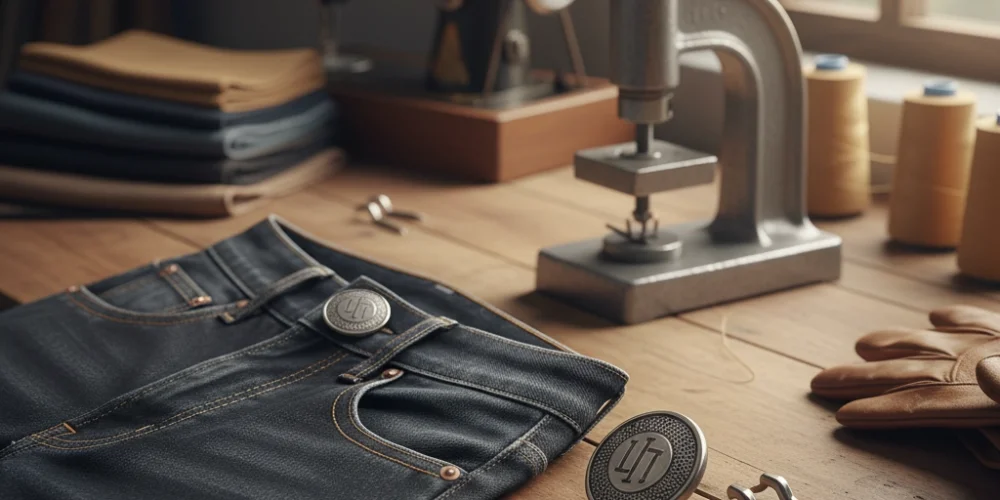
Stainless Steel Jeans Buttons are a high-durability closing accessory that does not require sewing and is used in the textile industry, especially on heavy fabrics such as jeans, jean jackets and coats.
Stainless steel prong-style permanent denim buttons are highly durable fasteners used primarily on jeans, jackets, and thick outerwear. They are secured to the fabric without being sewn with thread, ensuring long-lasting use.
Basic Features
Fork Nail (Mechanism):
This term refers to the special structure of the nail that secures the button to the fabric.
Unlike standard straight nails, when the split nail is driven in, it forks on the back surface and spreads over a wider area, securing the button to the fabric much more firmly.
Some models also use solid nails, which, when hammered, become stuck inside the button, trapping the fabric between the two layers.
Jeans Button (Function):
It is the main body visible from the outside that connects the two ends of the fabric through the buttonhole.
It is not sewn on like traditional buttons; it is permanently attached to the fabric using special machines or a hand press.
Stainless Steel Material:
The material from which buttons and nails are made is usually brass or other rust-resistant metal alloys.
In this way, the button does not darken or stain the fabric when exposed to washing and moisture.
Areas of Use and Benefits
Robustness:
Durability:
Aesthetic:
Common Areas of Use: